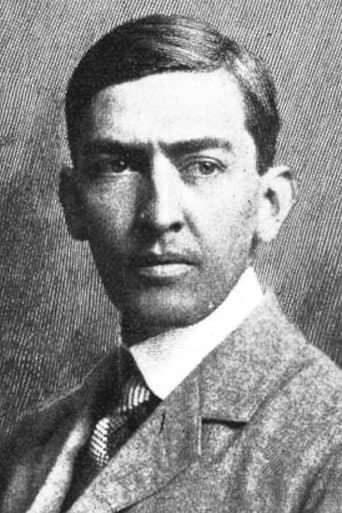
George Ade
- Known for
- Writing
- Born
- February 9, 1866
- Died
- May 16, 1944
- Birthplace
- Kentland, Indiana, USA
American writer, newspaper columnist, and playwright George Ade was first and foremost a self described Hoosier. Ade was born in Kentland, Indiana, one of seven children raised by John and Adaline Ade. While attending Purdue University, he met and started a lifelong friendship with cartoonist and Sigma Chi brother John T. McCutcheon and worked as a reporter for the Lafayette Call. In 1890, Ade was hired on by the Chicago Morning News (later known as the Chicago Record), where McCutcheon was working. He wrote the column, Stories of the Streets and of the Town. In the column, which McCutcheon illustrated, Ade illustrated Chicago-life. It featured characters like Artie, an office boy, Doc Horne, a gentlemanly liar, and Pink Marsh, a black shoeshine boy. Ade's well-known "Fables in Slang" was introduced in the popular column. Ade's literary reputation rests upon his achievements as a great humorist of American character during an important era in American history. The 1890's marked the first large migration from the countryside to burgeoning cities like Chicago, where, in fact, Ade produced his best fiction. He was a practicing realist during the Age of (William Dean) Howells and a local colorist of Chicago and the Midwest. His work constitutes a vast comedy of Midwestern manners and, indeed, a comedy of late 19th century American manners. Ade's fiction dealt consistently with the "little man," the common, undistinguished, average American, usually a farmer or lower middle class citizen (he sometimes skewered women too, especially women with laughable social pretensions). Ade's followed in the footsteps of his idol Mark Twain by making expert use of the American language. In his unique "Fables in Slang," (1899) which purveyed not so much slang as the American colloquial vernacular, Ade pursued an effectively genial satire notable for its scrupulous objectivity. Ade's regular practice in the best fables is to present a little drama incorporating concrete, specific evidence with which he implicitly indicts the object of his satire-- always a type (e.g., the social climber). The fable's actual moral is nearly always implicit, though he liked to tack on a mock, often ironic moral (e.g., "Industry and perseverance bring a sure reward"). As a moralist who does not overtly moralize, who is all too aware of the ironies of what in his day was the modern world, George Ade was perhaps our first modern American humorist, paving the way for people such as Will Rogers to follow. The United States, in Ade's lifetime, underwent a great population shift and transfer from an agricultural to an industrial economy. Many felt the nation suffered the even more agonizing process of shifting values toward philistinism, greed, and dishonesty. Ade's prevalent practice is to record the pragmatic efforts of the little man to get along in such a world. Ade was a playwright (see "Other Works") as well as an author, penning such stage works as Artie, The Sultan of Sulu (a musical comedy), The College Widow, The Fair Co-ed, and "The County Chairman." He wrote the first American play about football.
Filmography
Freshman Love 1936
Story
The County Chairman 1935
Writer
Young as You Feel 1931
Writer
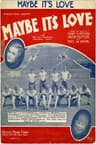
Maybe It's Love 1930
Writer
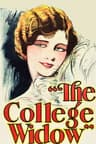
The College Widow 1927
Theatre Play
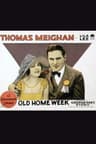
Old Home Week 1925
Writer
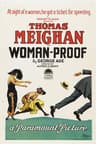
Woman-Proof 1923
Theatre Play
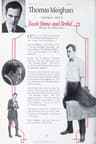
Back Home and Broke 1922
Story
Our Leading Citizen 1922
Story
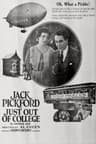
Just Out of College 1920
Writer
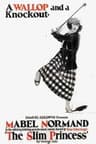
The Slim Princess 1920
Story
- The Fable of the Kid Who Shifted His Ideals to Golf and Finally Became a Baseball Fan and Took the Only Known Cure
The Fable of the Kid Who Shifted His Ideals to Golf and Finally Became a Baseball Fan and Took the Only Known Cure 1916
Writer
- The Fable of the Slim Girl Who Tried to Keep a Date That Was Never Made
The Fable of the Slim Girl Who Tried to Keep a Date That Was Never Made 1916
Story
- Artie, the Millionaire Kid
Artie, the Millionaire Kid 1916
Writer
- The Fable of the Grass Widow and the Mesmeree and the Six Dollars
The Fable of the Grass Widow and the Mesmeree and the Six Dollars 1916
Story
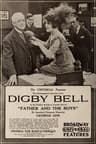
Father and the Boys 1915
Screenplay
- The Fable of the Roistering Blades
The Fable of the Roistering Blades 1915
Story
Just Out of College 1915
Screenplay
- The Fable of the Intermittent Fusser
The Fable of the Intermittent Fusser 1915
Story
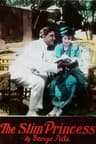
The Slim Princess 1915
Story
The Fable of a Night Given Over to Revelry 1915
Story
The Fable of the Good People Who Rallied to the Support of the Church 1915
Writer
The Fable of the Syndicate Lover 1915
Story
At the End of a Perfect Day 1915
Director
Hifaluting Tillie and Her Plain Parents 1915
Story
The Fable of the City Grafter and the Unprotected Rubes 1915
Director
Two Dinky Little Dramas of a Non-Serious Kind 1914
Director, Writer
The Fable of the Husband Who Showed Up and Did His Duty 1914
Director, Story
Two Pop-Up Fables 1914
Writer
The Fable of the Bush League Lover Who Failed to Qualify 1914
Story
The Fable of the Club Girls and the Four Times 1914
Story
The Fable of Aggie and the Aggravated Attacks 1914
Writer
The Fable 'Proving That Spongers are Found in a Drug Store' 1914
Story
- The Prevailing Craze
The Prevailing Craze 1914
Story

Three Boiled Down Fables 1914
Director, Story
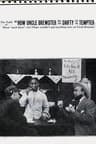
The Fable of 'How Uncle Brewster Was Too Shifty For the Tempter' 1914
Writer

The Fable of the 'People's Choice Who Answered the Call of Duty and Took Seltzer' 1914
Story
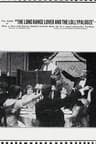
The Fable of 'The Long Range Lover and the Lollypalooze' 1914
Story
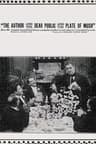
The Fable of 'The Author and the Dear Public and the Plate of Mush' 1914
Story
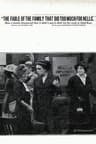
The Fable of the Family That Did Too Much For Nellie 1914
Writer
The Fable of The Adult Girl Who Got Busy 1914
Writer
- The Fable of One Samaritan Who Got Paralysis of the Helping Hand
The Fable of One Samaritan Who Got Paralysis of the Helping Hand 1914
Director
- The Fable of the Manoeuvres of Joel and Father's Second Time on Earth
The Fable of the Manoeuvres of Joel and Father's Second Time on Earth 1914
Story
- The Fable of the Busy Business Boy and the Droppers-in
The Fable of the Busy Business Boy and the Droppers-in 1914
Director, Story
The Fable of Napoleon and the Bumps 1914
as Self - Author George Ade, Director, Story
The Fable of the 'Good Fairy' 1914
Story
- The Fable of the Coming Champion Who Was Delayed
The Fable of the Coming Champion Who Was Delayed 1914
Story, Director
- The Fable of Higher Education That Was Too High for the Old Man
The Fable of Higher Education That Was Too High for the Old Man 1914
Writer, Director
The Fable of the Brash Drummer and the Nectarine 1914
Story, Director
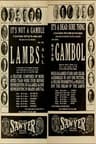
The Lambs' All-Star Gambol 1914
as Self
Credits from TMDB.