Hans Cürlis
- Known for
- Writing
- Born
- February 16, 1889
- Died
- August 6, 1982
- Birthplace
- Straelen, Germany
Hans Cürlis filmed Kandinsky, Grosz, Pechstein, Dix, Kollwitz, Liebermann, and Calder at work, many years before Paul Hasaert’s Visite à Picasso. Cürlis had studed with Wölflin and had written his thesis on Dürer. In 1919 he established the Institut für Kulturforschung, "the first German scientific institution which consciously selected the cinema as a form of expression through the results of its own work" (Cürlis, 1929). That he is not considering simply a form of documentation is demonstrated by the fact that among his first collaborators can be listed animation and silhouette artists such as Bartosch, Carl Koch, Lotte Reiniger, and Toni Rabold. After a film on African sculpture and a number of geographical documentaries, in 1922 he began the series Schaffende Hände: short films not "on art" so much as the physical process of the creation of a work of art turned into cinema.
Filmography
Drei Meister schneiden in Holz 1952
Director, Writer
Der Film entdeckte Kunstwerke indianischer Vorzeit 1951
Director, Writer
Schwarz - Weiß - Gelb 1949
Director, Writer
Bach - Mozart - Beethoven 1942
Director, Writer
Geheimnisse der Mumien 1934
Director, Writer
Vitamins in the Street 1946
Director
Fleckfieber droht! 1946
Director
People and Books 1929
Director
Alexander Calder 1929
Director
Alceo Dossena 1929
Director
The Lower Danube 1929
Director
Die Weltgeschichte als Kolonialgeschichte 1926
Director
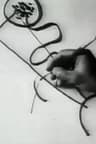
Schaffende Hände: Wassily Kandinsky in der Galerie Neumann-Nierendorf 1926
Director
Schaffende Hände: Max Oppenheimer 1924
Director
Schaffende Hände: George Grosz 1923
Director
Schaffende Hände: Lovis Corinth 1922
Director
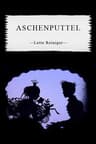
Cinderella 1922
Producer

The Ornament of the Lovestruck Heart 1919
Producer
Credits from TMDB.